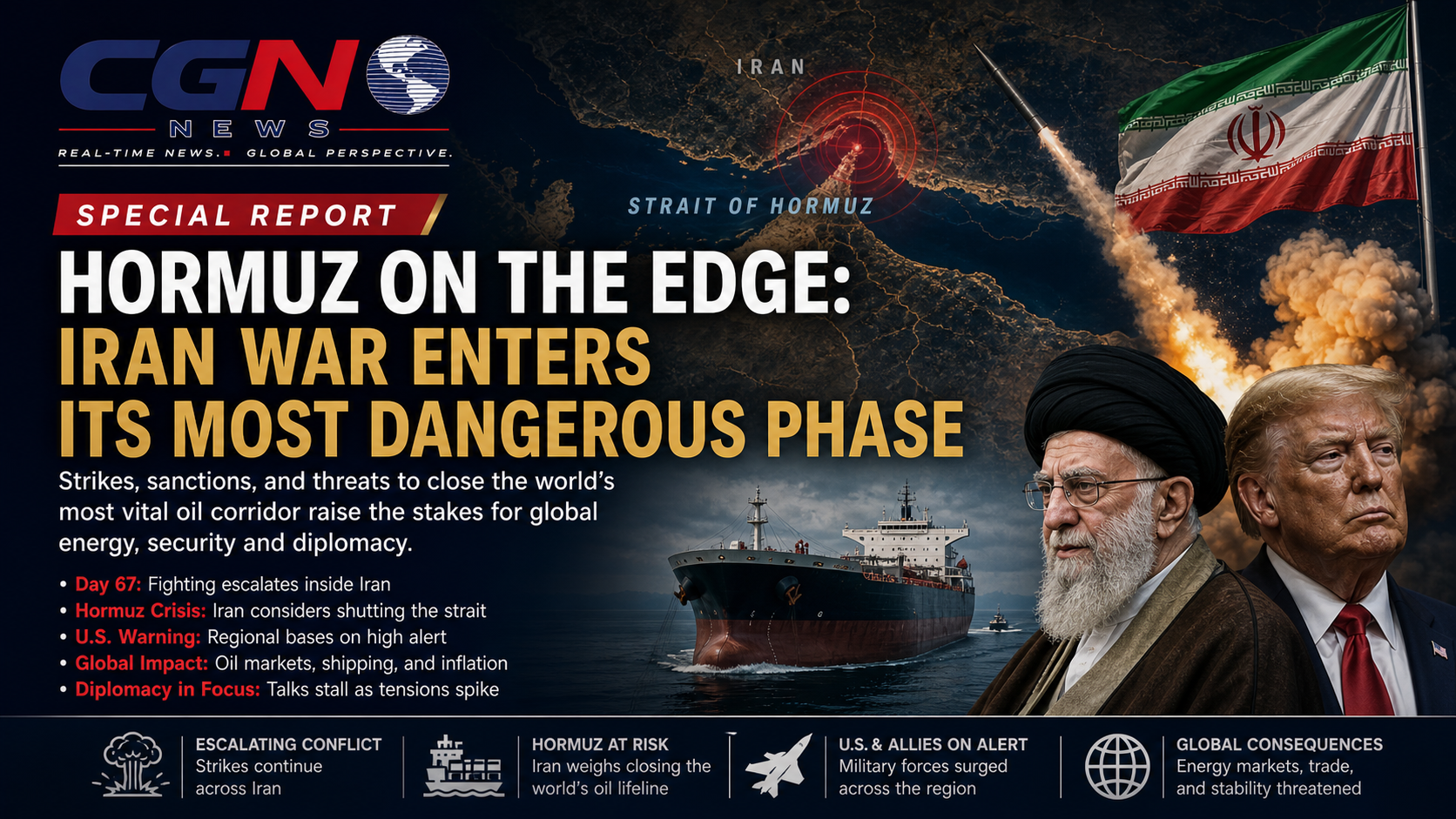
Image: CGN News / Cook Global News Network / Michael A. Cook / All Rights Reserved
DUBAI | The confrontation between the United States and Iran has entered one of its most dangerous phases around the Strait of Hormuz, where competing claims, naval escorts, missile warnings, suspected drone strikes and attacks near Gulf energy infrastructure are testing whether a fragile ceasefire can survive the fight over the world’s most important oil shipping corridor.
Checking article access...
What This Means
The Hormuz crisis matters because it connects a regional war directly to global trade, energy prices and maritime security. Even limited attacks around the strait can raise fuel costs, disrupt shipping, shake Gulf markets and force governments into difficult military decisions.
The larger risk is that both sides treat the crisis as controllable until it is not. The United States is trying to reopen the waterway without declaring the ceasefire dead. Iran is trying to preserve leverage without triggering an overwhelming response. Gulf states are trying to protect critical infrastructure while avoiding a wider regional war. That balance may not hold if another ship, port or military vessel is hit.