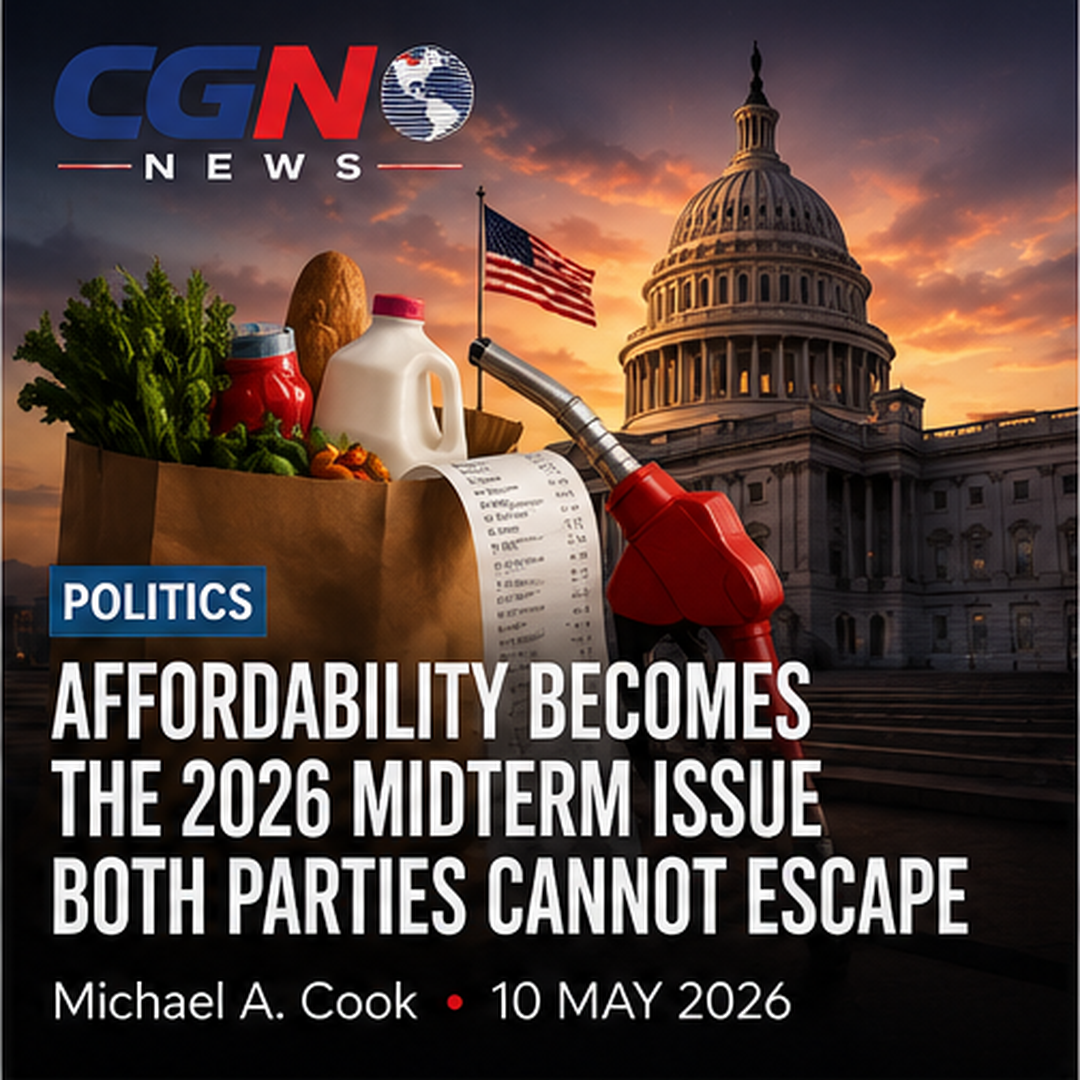
WASHINGTON | Affordability is becoming the issue both parties cannot escape in the 2026 midterm elections, not because it is one neat policy category, but because it is the word voters use when the cost of daily life feels larger than their paychecks, patience and trust in government.
CNN’s May 10 analysis framed affordability as a defining midterm pressure point, while Brookings has argued that rising costs across groceries, housing, health care, utilities, autos, child care and energy are turning affordability into a central campaign issue for 2026. Reuters also reported that health-care affordability is outranking other concerns among many Make America Healthy Again voters ahead of the midterms.
That combination gives candidates a problem that cannot be solved by a slogan. A voter may hear the word affordability and think first of rent. Another may think of groceries, insurance premiums, electricity bills, child-care costs, car repairs or gasoline. In a midterm year, those separate bills become one political judgment: is life getting easier or harder under the people in power?
The issue cuts across party lines because it is felt inside the household before it is translated into ideology. Families do not budget by policy category. They look at the total: mortgage or rent, food, utilities, insurance, medical bills, gas, credit-card payments and school expenses. When several rise at once, voters may blame the party in power, local officials, corporations or the political system itself.
For Republicans, the challenge is that President Trump returned to office promising a stronger economy and lower costs. If voters still feel squeezed, Republican candidates may have to defend not only the administration’s record but also the broader promise that conservative economic policy would improve purchasing power. War-related energy pressure, tariffs and higher borrowing costs can complicate that argument.
For Democrats, the opportunity is obvious but not automatic. They can campaign on drug pricing, health-care costs, utility bills and housing. But voters who are angry about affordability do not necessarily trust Democrats more. Many also blame Democratic-run cities and states for high housing costs, taxes, regulation or public-service failures. The party has to offer a practical answer, not only a critique.
Health care shows why affordability is politically dangerous. Reuters reported that affordability beat food safety and vaccine policy as a top health-related concern among MAHA supporters in a KFF poll. That finding matters because it suggests even voters aligned with Trump’s broader coalition may still be motivated by cost pressure more than by the cultural or regulatory issues most associated with the movement.
Housing may be the most powerful long-term affordability issue. Mortgage rates, rents, home prices, property taxes and insurance all shape whether younger families believe they can build stable lives. A strong job market can still feel weak if housing absorbs the gains. That creates pressure on both national and local candidates to explain zoning, supply, interest rates and housing assistance in plain English.
Groceries remain the most visible measure. Even when inflation slows on paper, shoppers compare current prices with what they remember paying. That memory gap is politically potent. A candidate explaining that inflation has moderated may still lose the argument if voters believe the baseline has permanently shifted against them.
Energy is the wild card. Iran-related pressure on oil and gasoline can move quickly into travel, shipping and utility costs. Higher fuel prices do not just affect drivers. They can raise distribution costs, food prices and business expenses. That makes foreign policy and household economics hard to separate in 2026.
Utilities are becoming another campaign issue because electricity demand is rising at the same time that households are sensitive to every bill. Data centers, grid investment, extreme weather and fuel costs can all flow into rates. Brookings has separately warned that rising electric rates could affect the midterms. Candidates who ignore utility bills may miss one of the clearest ways voters experience the economy.
Child care is a quieter but severe pressure. Many working parents face costs that can rival rent or college tuition. When child care is unaffordable or unavailable, families reduce work hours, delay careers or depend on informal networks. That turns a private family burden into a labor-market and economic-growth issue.
Autos and insurance also matter. Car prices, repair costs, interest rates and insurance premiums have become a major part of the affordability conversation. A family that can technically afford a vehicle may still feel trapped by the payment, fuel, maintenance and insurance attached to it.
The 2026 midterm map will make affordability especially important in swing suburbs and working-class districts. These are places where voters may not follow every Washington debate but know exactly what the grocery bill, insurance renewal and utility notice say. The party that sounds more fluent in those details may gain an advantage.
There is a messaging trap for both parties. Talking about affordability without specifics can sound hollow. Talking about one specific item can seem too small. The strongest campaigns will likely connect immediate relief with structural explanations: housing supply, competition in health care, energy infrastructure, child-care capacity, tax credits, tariffs, wages and local costs.
Voters are also skeptical. They have heard promises before. If a candidate says costs will come down, people will ask when and how. If the answer depends on global commodity markets, Congress, the Federal Reserve or private companies, voters may hear excuse-making. The challenge is to be honest without sounding powerless.
The affordability debate may also scramble traditional coalitions. A voter can be conservative on immigration, moderate on health care, skeptical of corporations and angry about utility bills all at once. The parties often organize issues into ideological boxes. Households experience them as one budget.
The candidates who handle affordability best will be those who show they understand the monthly pressure without insulting voters’ intelligence. That means fewer abstract claims and more explanation of how policy changes reach the kitchen table. It also means acknowledging tradeoffs. Cheap energy, clean energy, housing growth, local control, tariffs, domestic manufacturing and low prices do not always align cleanly.
The midterms will still include immigration, abortion, crime, foreign policy and democracy arguments. But affordability may be the issue that gives those debates emotional force. Voters who feel financially secure may treat politics differently from voters who feel one bill away from falling behind.
The 2026 affordability campaign is therefore not a single-issue campaign. It is a referendum on whether government can make ordinary life feel manageable. That is a high bar, and neither party has fully met it.
The next phase will test whether the institutions at the center of this story can turn public statements into verifiable action. For readers, the important questions are practical: what changes next, who is affected, which official records confirm the direction of the story, and whether leaders explain the tradeoffs clearly enough for the public to judge the outcome.
The next phase will test whether the institutions at the center of this story can turn public statements into verifiable action. For readers, the important questions are practical: what changes next, who is affected, which official records confirm the direction of the story, and whether leaders explain the tradeoffs clearly enough for the public to judge the outcome.
The next phase will test whether the institutions at the center of this story can turn public statements into verifiable action. For readers, the important questions are practical: what changes next, who is affected, which official records confirm the direction of the story, and whether leaders explain the tradeoffs clearly enough for the public to judge the outcome.
The affordability frame is especially difficult because it turns every receipt into a political message. A campaign can spend millions on advertising, but voters often trust the bill in front of them more than the speech on television. That gives grocery stores, rent notices, insurance renewals and utility statements an unusual amount of political power.
Both parties will try to define the cause. Republicans may point to regulation, immigration, energy policy, taxes and Democratic city governance. Democrats may point to corporate pricing, health-care consolidation, housing supply failures, tariffs and Republican control in Washington. Voters may accept pieces of both arguments while still punishing whichever party appears responsible for the present.
The danger for candidates is sounding too national when the problem feels local. Housing affordability in Indianapolis is not identical to housing affordability in Phoenix, Chicago, Miami or rural Pennsylvania. Health-care networks, utility regulators, property taxes and local wages all change how affordability is felt. A national campaign message has to leave room for local realities.
Polls can identify anxiety, but they cannot fully capture exhaustion. Affordability politics is often about fatigue: the feeling that every month requires another compromise, another delayed purchase, another credit-card balance, another family conversation about what can wait. That emotional experience can make voters impatient with technical explanations.
Iran-related energy pressure could be especially damaging because gasoline is one of the few prices voters see advertised on giant signs. Even people who do not follow foreign policy understand when fuel costs change their commute or vacation plans. That makes overseas conflict a domestic affordability issue almost instantly.
The most credible candidates may be those who admit there is no single lever. Lowering costs requires housing construction, health-care competition, energy stability, wage growth, child-care capacity, tax choices and disciplined trade policy. Voters may not expect miracles, but they may reward politicians who sound honest about the machinery behind the bills.
What this means
Affordability matters because it is the way voters turn dozens of separate costs into one political judgment. In 2026, the winning party may be the one that sounds most credible on the monthly bills people actually pay: housing, health care, food, utilities, child care, insurance and fuel.