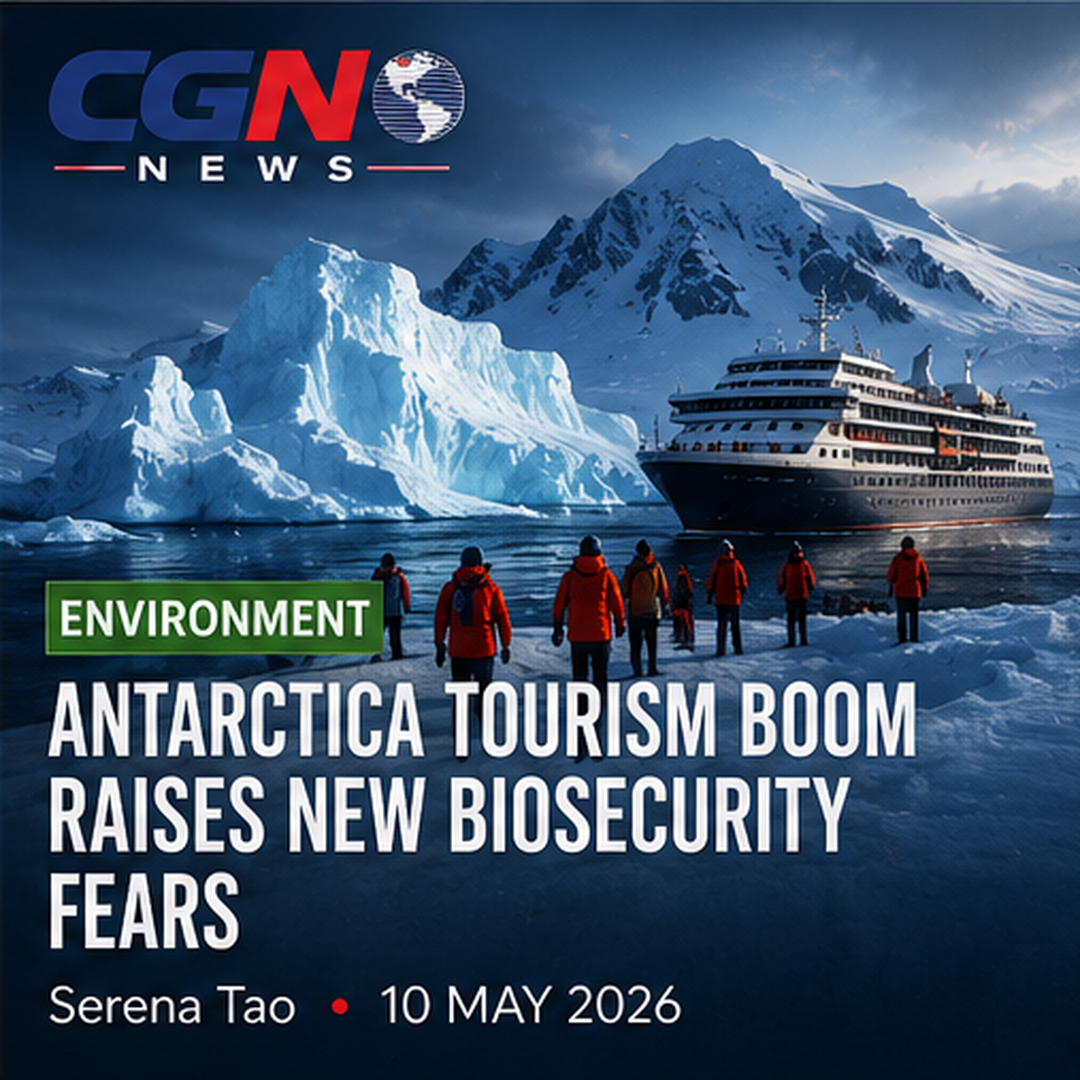
SYDNEY | Antarctica’s tourism boom is turning one of the world’s most remote places into a crowded test of biosecurity, conservation and the limits of adventure travel.
The Associated Press reported that more than 80,000 tourists set foot on Antarctica in 2024, with another 36,000 viewing the continent from ships, according to data from the International Association of Antarctica Tour Operators. The International Union of Concerned Scientists estimates that tourism to Antarctica has grown tenfold in the past 30 years.
The numbers matter because Antarctica is not built for ordinary tourism. It has no cities, no native human population and ecosystems that evolved under extreme isolation. A boot, backpack, ship hull or piece of clothing can carry seeds, microbes or contaminants into a place with little natural defense against outside pressure.
Biosecurity is the immediate concern. Visitors can unintentionally bring organisms from other continents or move material between Antarctic sites. Even careful travelers can carry soil, spores, bird pathogens or invasive species. In a warmer world, some introduced organisms may survive more easily than they once would have.
Disease risk is also rising. Antarctica’s wildlife, including penguins and seals, can be vulnerable to pathogens that move through human activity, migratory birds or changing ecosystems. Tourism does not automatically cause disease, but it increases contact points and complicates monitoring.
The continent’s remoteness can create a false sense of protection. Distance does not stop risk when ships, aircraft, tourists and equipment move regularly through the region. Every landing site becomes a management problem: who goes ashore, where they walk, what they touched before arrival and how closely rules are enforced.
Tour operators argue that regulated tourism can support conservation by building public appreciation for Antarctica. That argument has merit. People who see the continent may become stronger advocates for climate protection and science. But education does not erase physical impact.
The pressure is not evenly distributed. Popular landing sites can receive repeated visits, concentrating foot traffic and disturbance. Wildlife may be affected not only by direct contact but by noise, proximity and altered behavior when humans approach too closely.
Climate change makes the issue sharper. Antarctica is already experiencing shifts in ice, temperature and species patterns. Tourism adds another stressor to systems already under pressure. A footprint that might seem small in one location can matter when repeated across seasons and combined with warming.
Ship traffic creates additional concerns. Vessels can introduce pollution, disturb marine life, increase accident risk and place heavy demands on emergency response if something goes wrong. A serious rescue in Antarctic waters can be dangerous, expensive and dependent on limited regional capacity.
The International Association of Antarctica Tour Operators has rules and guidelines, but the growth of the industry raises the question of whether voluntary systems and existing treaty structures are enough. A tenfold tourism increase over three decades changes the scale of the problem.
Scientists are likely to push for tighter cleaning protocols, site limits, stronger disease surveillance and better data sharing. Those measures may inconvenience tourists, but they are cheaper than trying to remove invasive organisms or reverse damage after it happens.
There is also an equity question. Antarctica is part of the global commons, but access is mostly limited to wealthy travelers. When a fragile place is visited by a small affluent group, the environmental risks are shared globally while the experience is private. That tension should be part of the policy debate.
Governments involved in the Antarctic Treaty System must balance scientific research, environmental protection and tourism oversight. The treaty framework has helped prevent ordinary territorial exploitation, but tourism pressure is a different kind of challenge than military competition or mineral claims.
For travelers, the ethical responsibility is clear. Antarctica is not a theme park. It is a protected environment where the goal should be minimal impact, strict compliance and humility. The best expedition travel understands that seeing a place does not mean consuming it.
For tour companies, the business model depends on preserving what they sell. If Antarctica’s wildlife or landscape is degraded, the industry loses its central appeal. That gives operators a direct incentive to support stronger safeguards.
The hardest question is whether there should be limits on growth. Better cleaning, education and monitoring can reduce risk, but they may not be enough if visitor numbers continue climbing. At some point, a protected continent may require not only better rules but fewer landings.
Antarctica’s tourism boom reveals a familiar environmental dilemma: people are drawn to fragile places precisely because they are rare, beautiful and remote. The more people come, the more management is needed to keep those qualities intact.
The lesson is not that no one should ever visit. The lesson is that the right to visit cannot outrun the duty to protect. Antarctica’s isolation is no longer protection by itself. Human restraint has to do the work.
The next phase will test whether the institutions at the center of this story can turn public statements into verifiable action. For readers, the important questions are practical: what changes next, who is affected, which official records confirm the direction of the story, and whether leaders explain the tradeoffs clearly enough for the public to judge the outcome.
The next phase will test whether the institutions at the center of this story can turn public statements into verifiable action. For readers, the important questions are practical: what changes next, who is affected, which official records confirm the direction of the story, and whether leaders explain the tradeoffs clearly enough for the public to judge the outcome.
The next phase will test whether the institutions at the center of this story can turn public statements into verifiable action. For readers, the important questions are practical: what changes next, who is affected, which official records confirm the direction of the story, and whether leaders explain the tradeoffs clearly enough for the public to judge the outcome.
The issue is also tied to climate change because warming can change what survives on the continent. Organisms that once might have failed in extreme cold may find more hospitable niches as conditions shift. That makes prevention more urgent, not less.
Antarctic tourism also creates a monitoring challenge. Scientists can study landing sites, but the continent is vast and expensive to access. Once contamination is detected, tracing its origin can be difficult. Prevention is usually more realistic than cleanup.
There is a psychological contradiction in the tourism boom. Travelers often visit Antarctica because they want to witness pristine nature, but the act of visiting can contribute to the pressure that makes pristine conditions harder to maintain. Responsible tourism has to confront that contradiction honestly.
The industry’s future may depend on stricter limits at the most popular sites. Rotating landings, caps on visitor numbers, mandatory cleaning inspections and stronger reporting requirements could reduce risk. Those rules would likely raise costs, but they may also preserve the experience itself.
Governments have to decide whether Antarctica should be treated as an extraordinary case. Ordinary tourism-growth logic says that rising demand is good. Antarctica’s environmental logic says that rising demand can become a threat. Policy has to choose which logic takes priority.
For readers, Antarctica’s remoteness should not make the story feel distant. The continent plays a role in global climate systems, ocean health and scientific understanding. Human pressure there is a reminder that even the places farthest from cities are now connected to ordinary choices made by travelers and industries.
The environmental importance of antarctica tourism boom raises new biosecurity fears is that it turns a scientific warning into a management problem. The issue is no longer only whether risk exists. It is whether governments, companies and communities are prepared to limit damage before the next season, trip, heatwave or emergency.
Environmental risk is often cumulative. A single visitor, hot day, storm or fire line may appear manageable in isolation. The problem grows when small pressures repeat across years and collide with warming, infrastructure weakness, population growth and limited public budgets.
Public communication will be central. People respond better when guidance is specific: where the danger is, who is most vulnerable, what actions reduce risk and what institutions are responsible. Vague warnings often produce either panic or indifference.
The economic layer should not be ignored. Environmental damage affects insurance, tourism, farming, utilities, construction, public health and government spending. Treating climate and conservation as separate from economics misses how the costs actually reach households.
The equity question also matters. People with money can often adapt faster, travel differently, insure property, move away from risk or buy protection. People with fewer resources may face the same hazards with fewer choices. Good policy has to account for that imbalance.
The next record, report or incident should be judged by whether it leads to prevention. The goal is not simply to document harm after it happens. The goal is to identify where better rules, investment and behavior can reduce the harm before it becomes routine.
The environmental importance of antarctica tourism boom raises new biosecurity fears is that it turns a scientific warning into a management problem. The issue is no longer only whether risk exists. It is whether governments, companies and communities are prepared to limit damage before the next season, trip, heatwave or emergency.
Environmental risk is often cumulative. A single visitor, hot day, storm or fire line may appear manageable in isolation. The problem grows when small pressures repeat across years and collide with warming, infrastructure weakness, population growth and limited public budgets.
Public communication will be central. People respond better when guidance is specific: where the danger is, who is most vulnerable, what actions reduce risk and what institutions are responsible. Vague warnings often produce either panic or indifference.
The economic layer should not be ignored. Environmental damage affects insurance, tourism, farming, utilities, construction, public health and government spending. Treating climate and conservation as separate from economics misses how the costs actually reach households.
The equity question also matters. People with money can often adapt faster, travel differently, insure property, move away from risk or buy protection. People with fewer resources may face the same hazards with fewer choices. Good policy has to account for that imbalance.
The next record, report or incident should be judged by whether it leads to prevention. The goal is not simply to document harm after it happens. The goal is to identify where better rules, investment and behavior can reduce the harm before it becomes routine.
What this means
Antarctica tourism matters because rising visitor numbers can bring disease, contamination and disturbance to ecosystems that have little margin for error. The policy choice is whether governments and tour operators tighten rules before harm becomes irreversible.
Additional Reporting By: Associated Press.