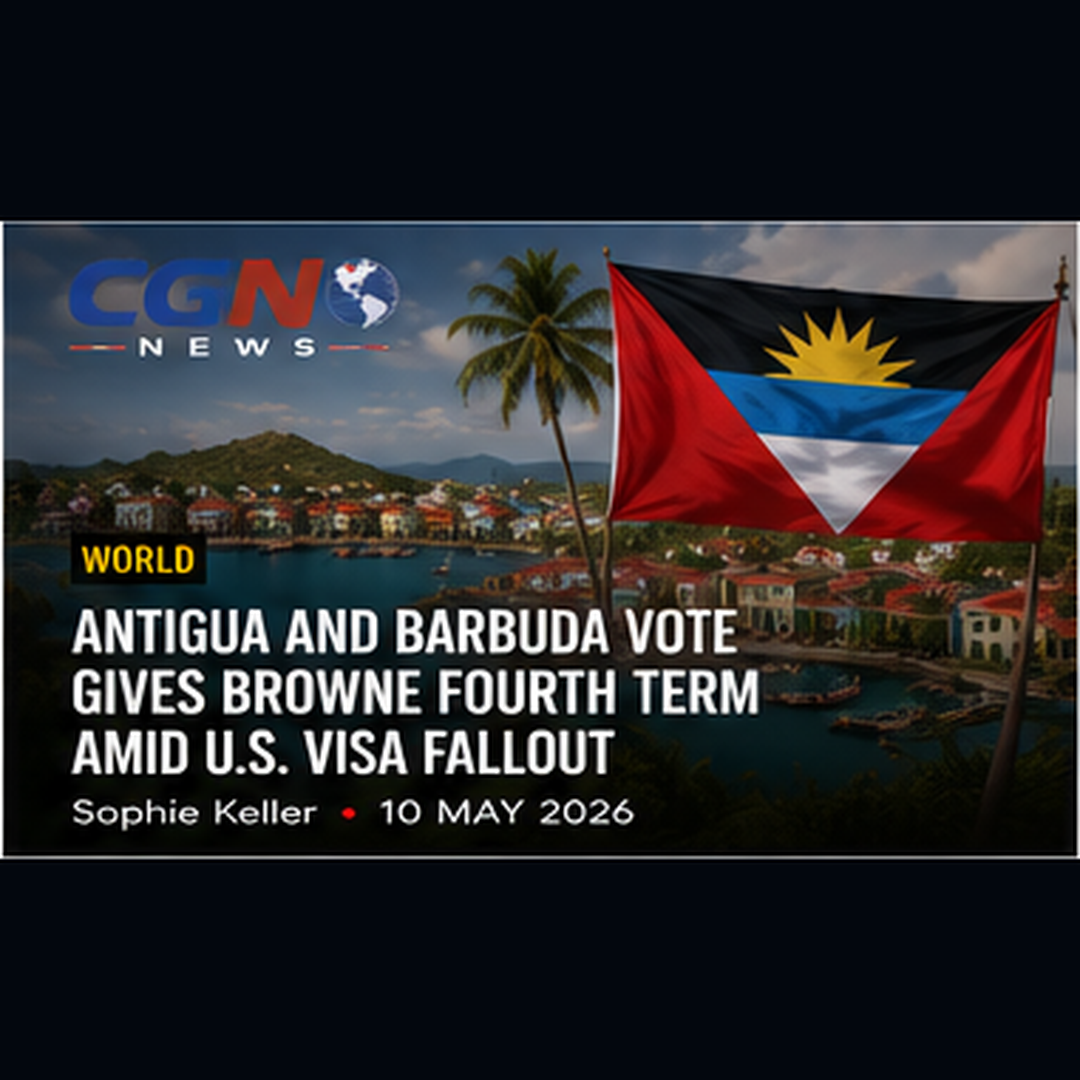
CASTRIES | Antigua and Barbuda Prime Minister Gaston Browne has secured a fourth term, giving his Labour Party a commanding parliamentary majority after a campaign shaped by the economy and anxiety over U.S. visa restrictions.
Reuters reported that Browne’s Labour Party won 15 of the 17 seats in parliament, according to preliminary official data, after a snap election dominated by economic concerns and the fallout from U.S. visa restrictions. The opposition United Progressive Party won one seat.
The result gives Browne a strong mandate, but it also gives him clear responsibility. A landslide victory can reduce parliamentary obstacles, yet it leaves fewer excuses if economic promises are not met.
The U.S. visa issue became central because mobility matters deeply to small Caribbean states. Travel access affects families, students, businesspeople, tourism connections and diaspora networks. When voters believe visa restrictions threaten opportunity or dignity, the issue becomes domestic politics.
Antigua and Barbuda’s economy depends heavily on tourism, services and external relationships. That makes international confidence and travel access especially important. A small-state election can therefore turn on foreign-policy consequences that would be peripheral in larger economies.
Browne’s victory suggests voters chose continuity during uncertainty. Long-serving leaders often benefit when voters believe external pressure requires experience. But the same longevity can also create fatigue if citizens feel institutions are too personalized around one figure.
The Labour Party’s parliamentary dominance will allow the government to move quickly. That can be useful for economic planning, but it also places pressure on oversight. Strong majorities need strong accountability because opposition voices are numerically limited.
The opposition’s weak result raises questions about political competition. A democracy can have a legitimate landslide, but healthy governance still requires scrutiny, media freedom and civil-society engagement. Voters may support a government and still need institutions that ask hard questions.
For the wider Caribbean, the election shows how U.S. policy decisions can reverberate through domestic politics. Visa restrictions are not only consular matters. They can become symbols of respect, leverage and dependence.
Browne will likely frame the result as confidence in his economic management. His government can argue that voters preferred a tested leadership team during a difficult international environment. Critics will ask whether growth is broad-based and whether ordinary households feel the benefits.
The tourism sector will remain central. Antigua and Barbuda must compete for visitors while managing infrastructure, climate risk and the cost of imported goods. A strong mandate does not remove those structural challenges.
Climate vulnerability is another background issue. Caribbean states face hurricanes, rising seas and insurance pressure. Economic planning cannot be separated from resilience planning, especially for islands dependent on coastal infrastructure.
The election also matters for regional diplomacy. Browne has been an assertive Caribbean voice, and another term may reinforce his role in regional debates over climate finance, citizenship programs, tourism and relations with larger powers.
Citizenship and mobility programs have been a recurring issue for some Caribbean governments, attracting scrutiny from larger countries worried about security, money laundering or sanctions evasion. Visa fallout can intensify those tensions.
For voters, the practical question is whether the government can protect travel access while improving wages, services and opportunity at home. A strong passport matters, but so does a strong domestic economy.
The Labour Party’s expanded majority may also shape public investment decisions. Infrastructure, housing, education and tourism upgrades will be easier to pass politically, but the government must show financing discipline.
The opposition will have to rebuild. A one-seat showing forces questions about message, organization and leadership. If voters do not see a credible alternative, the governing party’s dominance may continue even if public frustration exists.
International partners will watch how Browne uses the mandate. A fourth term can signal stability, but it also raises expectations for institutional transparency and policy delivery.
Antigua and Barbuda’s vote is therefore a small-island election with wider themes: mobility, economic dependence, climate exposure and the relationship between domestic democracy and larger powers. Browne won decisively. The harder question is whether the mandate can translate into security for households and confidence abroad.
The next phase will test whether the institutions at the center of this story can turn public statements into verifiable action. For readers, the important questions are practical: what changes next, who is affected, which official records confirm the direction of the story, and whether leaders explain the tradeoffs clearly enough for the public to judge the outcome.
The next phase will test whether the institutions at the center of this story can turn public statements into verifiable action. For readers, the important questions are practical: what changes next, who is affected, which official records confirm the direction of the story, and whether leaders explain the tradeoffs clearly enough for the public to judge the outcome.
The next phase will test whether the institutions at the center of this story can turn public statements into verifiable action. For readers, the important questions are practical: what changes next, who is affected, which official records confirm the direction of the story, and whether leaders explain the tradeoffs clearly enough for the public to judge the outcome.
Browne’s new term will also be watched through the lens of citizenship-by-investment programs, a recurring issue for several Caribbean governments. These programs can bring revenue, but they also attract scrutiny from larger countries concerned about security and due diligence.
The election’s lopsided result may strengthen the government’s negotiating position abroad. A leader with a large majority can claim democratic backing when dealing with Washington or regional partners. But that same majority means foreign-policy missteps will be harder to blame on domestic obstruction.
Tourism remains a vulnerability and an advantage. Antigua and Barbuda can benefit from strong visitor demand, but hurricanes, airline access, visa tensions and global economic slowdowns can quickly affect revenue. A fourth-term government must plan for shocks as well as growth.
The opposition’s weakness may also change how accountability functions. If Parliament is dominated by one party, independent media, courts and civil society become even more important. Strong mandates should not weaken scrutiny.
For Caribbean neighbors, the result offers another example of how small states navigate pressure from larger powers. Visa rules, financial compliance, climate finance and tourism access can all become domestic political issues because they reach households directly.
Browne’s challenge is to turn electoral dominance into resilience. That means protecting mobility, strengthening the economy, preparing for climate risk and making sure a large majority does not become complacency.
For a global audience, the importance of antigua and barbuda vote gives browne fourth term amid u.s. visa fallout is that it does not sit neatly inside one border. The consequences move through diplomacy, markets, security planning, migration, law and public trust, which is why the story belongs in CGN’s World file rather than being treated as a narrow local development.
The first public test will be official documentation. Statements, court filings, election data, government decrees, diplomatic communiques and agency records will determine whether early claims hold up. In fast-moving international stories, the record often changes in pieces rather than all at once, and the most responsible coverage follows those pieces carefully.
The second test is whether affected communities see any practical change. International politics can sound distant, but it becomes real through prices, safety, visas, services, borders, infrastructure, aid access, courts and the ability of families to make plans. That is the level at which readers eventually judge whether leaders handled the moment well.
There is also a risk of overreading a single event. One hearing, reshuffle, election result, summit or security operation does not by itself settle a national direction. It is a signal. The question is whether the signal is confirmed by follow-through over the next days and weeks.
For policymakers, the story is a reminder that credibility is built before a crisis. Governments that explain decisions clearly and publish reliable information tend to have more room to maneuver when events become tense. Governments that hide details or shift explanations often lose trust precisely when they need it most.
For CGN News readers in the United States, the relevance is not only foreign-policy curiosity. World developments can affect trade, migration, security cooperation, energy, commodity prices, religious communities, university ties, humanitarian giving and the way American officials decide where to spend diplomatic attention.
The most useful next step is to watch institutions rather than personalities alone. Leaders matter, but institutions decide whether promises become enforceable actions. Courts, parliaments, ministries, regional bodies, security agencies and civil society groups will reveal whether this moment becomes durable change or a temporary headline.
For a global audience, the importance of antigua and barbuda vote gives browne fourth term amid u.s. visa fallout is that it does not sit neatly inside one border. The consequences move through diplomacy, markets, security planning, migration, law and public trust, which is why the story belongs in CGN’s World file rather than being treated as a narrow local development.
The first public test will be official documentation. Statements, court filings, election data, government decrees, diplomatic communiques and agency records will determine whether early claims hold up. In fast-moving international stories, the record often changes in pieces rather than all at once, and the most responsible coverage follows those pieces carefully.
The second test is whether affected communities see any practical change. International politics can sound distant, but it becomes real through prices, safety, visas, services, borders, infrastructure, aid access, courts and the ability of families to make plans. That is the level at which readers eventually judge whether leaders handled the moment well.
There is also a risk of overreading a single event. One hearing, reshuffle, election result, summit or security operation does not by itself settle a national direction. It is a signal. The question is whether the signal is confirmed by follow-through over the next days and weeks.
For policymakers, the story is a reminder that credibility is built before a crisis. Governments that explain decisions clearly and publish reliable information tend to have more room to maneuver when events become tense. Governments that hide details or shift explanations often lose trust precisely when they need it most.
For CGN News readers in the United States, the relevance is not only foreign-policy curiosity. World developments can affect trade, migration, security cooperation, energy, commodity prices, religious communities, university ties, humanitarian giving and the way American officials decide where to spend diplomatic attention.
The most useful next step is to watch institutions rather than personalities alone. Leaders matter, but institutions decide whether promises become enforceable actions. Courts, parliaments, ministries, regional bodies, security agencies and civil society groups will reveal whether this moment becomes durable change or a temporary headline.
What this means
Browne’s fourth term matters because the election turned on more than party loyalty. It reflected the importance of mobility, economic security and U.S. relations for small Caribbean states. The mandate is strong, but so are the expectations attached to it.