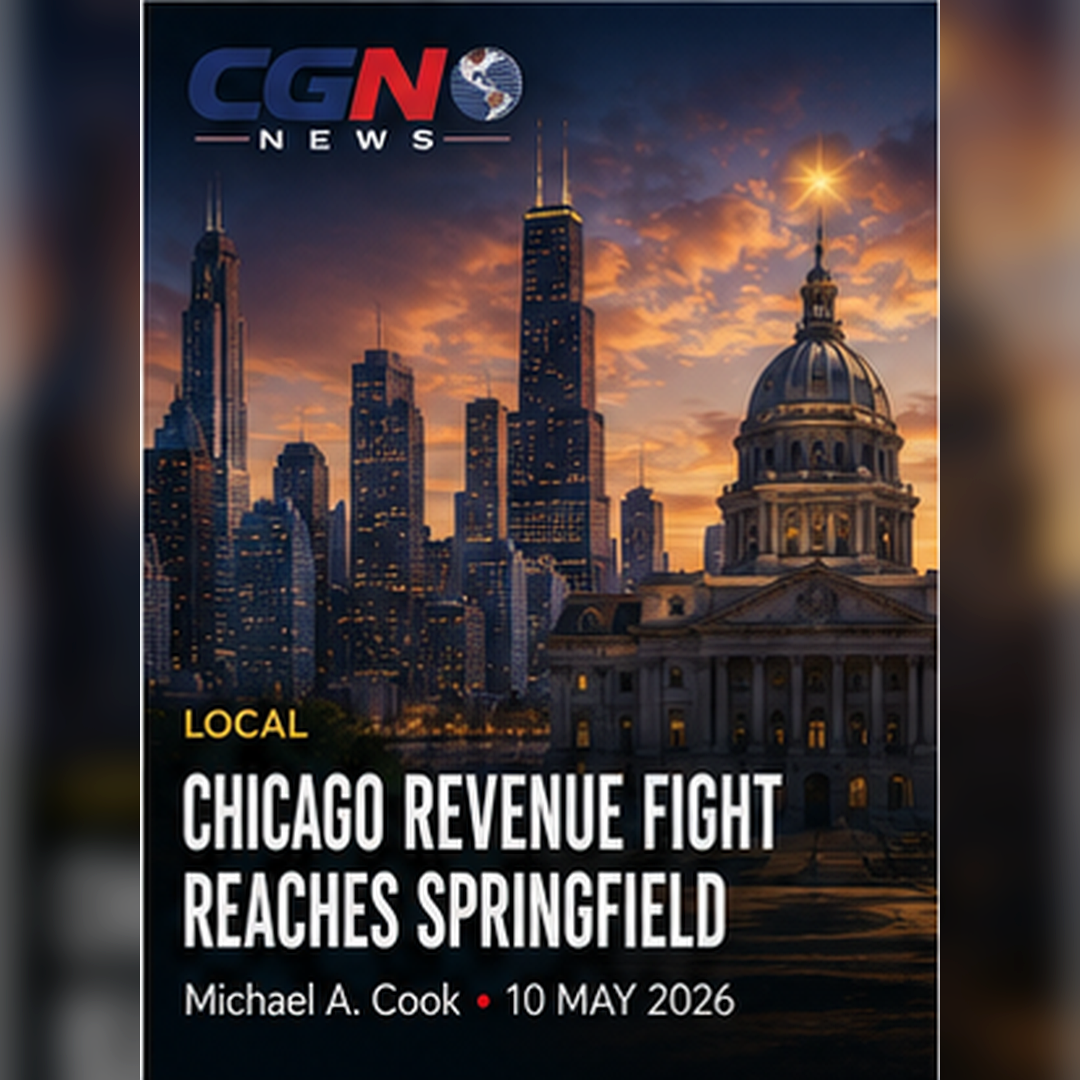
CHICAGO — Mayor Brandon Johnson’s trip to Springfield placed two of Chicago’s biggest political pressures in the same frame: the city’s need for revenue and the fight over whether the Bears’ future remains in Chicago or moves deeper into the suburbs. WBEZ reported that Johnson left the statehouse determined after lobbying against possible cuts to local government funding and warning lawmakers against a Bears suburban move.
The mayor’s visit came at a difficult financial moment for Chicago. City leaders are searching for stable revenue while trying to protect services, manage labor costs and respond to public pressure over taxes and affordability. Springfield matters because state decisions on revenue sharing, tax policy and stadium incentives can shape what Chicago has to work with at home.
The Bears issue adds emotional and fiscal stakes. Professional football is not only a sports business in Chicago; it is tied to civic identity, lakefront politics, tourism and regional economic competition. Johnson has said the team should remain in the city, but WBEZ reported that he offered no new stadium site in the interview. That leaves the political message clear while the practical plan remains unresolved.
Arlington Heights and other suburban possibilities remain part of the conversation because the Bears have explored alternatives to Soldier Field. For Chicago, losing the team would be more than symbolic. It would raise questions about the lakefront, event revenue, redevelopment and whether the city can compete with suburban governments offering land, tax structures or infrastructure support.
At the same time, taxpayers have reason to be cautious. Stadium deals often promise economic benefits that are difficult to verify once public money, tax incentives or infrastructure commitments are involved. Voters may want the Bears to stay and still oppose a deal that shifts too much risk onto public budgets. The challenge for Johnson is to defend Chicago’s interests without committing the city to a weak bargain.
The revenue fight is broader than football. WBEZ reported that Johnson partnered with other municipalities concerned about possible reductions in state funding. That coalition reflects a basic fact of Illinois government: cities depend on state decisions, and when Springfield changes formulas, local budgets feel the impact. For Chicago, even modest shifts can become major because the city’s obligations are large.
Michael A. Cook’s Local desk sees the Springfield trip as a test of whether Chicago can turn urgency into leverage. The mayor needs lawmakers to understand the city’s fiscal pressure, but he also needs Chicago residents to believe the administration has a plan. A trip to the Capitol can show effort. It cannot substitute for a detailed revenue strategy.
The Bears debate may dominate headlines because it is visual and emotional. But the more important question may be how Chicago pays for basic services over the next several years. Property taxes, fees, state transfers, economic growth and labor agreements all intersect. Stadium politics should not crowd out the larger fiscal conversation.
Springfield lawmakers have their own incentives. Some may support keeping the Bears in Chicago. Others may see suburban development as a statewide economic opportunity. Still others may resist any arrangement that appears to privilege one franchise while communities across Illinois need funding for schools, roads, pensions and public safety. That makes the stadium fight part of a larger competition for state attention.
For residents, the next step should be clarity. If the city wants the Bears to stay, what site is realistic? What would it cost? What public contribution, if any, would be required? What are the benefits, and who bears the risk? If the city wants new revenue from Springfield, what specific formula or legislation is being sought? Voters deserve answers before political pressure turns into a deal.
The mayor left Springfield saying he was determined. Determination may be necessary, but Chicago’s situation requires more than persistence. It requires numbers, partners and a plan that separates civic pride from fiscal exposure.
The Bears may be the symbol, but revenue is the substance. Chicago’s fight in Springfield is ultimately about whether the city can protect its budget, its identity and its taxpayers at the same time.
The debate also tests Chicago’s relationship with state government. The city is the economic engine of Illinois, but that does not mean lawmakers outside Chicago will automatically support its requests. Suburban and downstate legislators may ask why state policy should protect Chicago’s stadium interests or revenue needs when their own communities face budget pressures. Johnson’s coalition with other municipalities is an attempt to frame the issue as shared, not Chicago-only.
Any Bears deal would have to overcome a long history of public skepticism toward stadium financing. Across the country, cities have been promised jobs, tourism and redevelopment only to discover that public subsidies do not always produce broad returns. Chicago residents are right to ask whether a new or renovated stadium would pay for itself, who controls surrounding development and what happens if costs rise.
Soldier Field remains part of the emotional landscape. It is historic, visible and tied to Chicago’s lakefront identity. But nostalgia does not solve capacity, revenue, ownership or infrastructure questions. The Bears want a modern business model; the city wants to preserve a civic asset and prevent a high-profile departure. Those goals overlap only if the financial structure works.
Springfield’s role could be decisive if tax policy, infrastructure support or development authority becomes necessary. That is why the fight has moved beyond City Hall. A stadium decision can involve transportation funding, property-tax questions, state incentives and regional economic competition. The more public tools required, the more public scrutiny is justified.
Johnson also has to manage timing. Chicago’s fiscal needs are immediate, while stadium negotiations can stretch for years. If the mayor ties the two too closely, he risks letting a sports-franchise debate overshadow urgent budget questions. If he separates them too much, he may lose leverage over one of the city’s most visible economic assets.
For taxpayers, the safest principle is transparency. No stadium or revenue deal should be sold through civic emotion alone. The city should publish assumptions, cost ranges, financing options, risks and alternatives. If keeping the Bears in Chicago is worth public involvement, officials should be able to explain why in numbers, not slogans.
The politics of the Bears will remain powerful because football gives the debate an audience that budget hearings rarely get. That attention can be useful if it forces clearer discussion of city finances. It can be harmful if it turns fiscal policy into a loyalty test. Wanting the Bears to stay and demanding a responsible deal are not opposing positions.
Chicago’s next challenge is to prove that it can negotiate from strength. That means knowing what it can afford, what it will not subsidize and what it expects in return. Springfield can help or hinder, but the city’s own clarity will determine whether determination becomes a strategy.
The state funding issue may be less glamorous than the stadium fight, but it is more immediate. Local governments depend on predictable revenue to plan staffing, services and capital needs. If state formulas change unexpectedly, cities may be forced into cuts, fee increases or short-term budgeting choices that create longer-term problems.
Chicago’s fiscal debate is also shaped by public trust. Residents have heard promises before: that a deal will pay off, that a new project will transform a neighborhood, that a tax change will be temporary. Officials asking for support now must overcome that history with clearer numbers and better disclosure.
The Bears have leverage because professional sports teams are scarce assets. Cities do not want to lose them, and suburbs see opportunity in attracting them. But leverage is not unlimited. A franchise also needs infrastructure, fans, transportation and political permission. Chicago should not negotiate as though it has no cards to play.
The lakefront remains a legal and civic complication. Any major stadium plan connected to Soldier Field must navigate public-space concerns, transportation, environmental issues and the city’s long-running debate over how the lakefront should be used. That debate predates the Bears and will outlast this ownership cycle.
Suburban alternatives raise different questions. A larger stadium district could offer more parking, development space and team-controlled revenue, but it would shift the regional balance of sports spending. If state assistance is involved, taxpayers outside the immediate project area deserve to know why public support is justified.
Johnson’s challenge is that every option has critics. Raise taxes, and residents resist. Cut services, and communities suffer. Let the Bears leave, and the city loses a symbolic institution. Subsidize too much, and taxpayers may feel used. The mayor needs to show that his approach recognizes those tradeoffs rather than pretending they do not exist.
The next phase should be documentation. Chicago should publish what it wants from Springfield, what it is willing to offer the Bears, what it will not offer and how each option affects the budget. Public clarity would not end the fight, but it would improve it.
Until then, the Springfield trip is a political marker. It shows the mayor is trying to protect city interests. The test is whether that effort becomes a transparent strategy or another chapter in Chicago’s long history of expensive, emotional and complicated stadium politics.
A credible stadium discussion also needs a transportation plan. Whether the Bears remain near the lakefront or move elsewhere, fans need access that does not overwhelm neighborhoods or create unrealistic parking demands. Transit, road capacity and event-day management are not secondary issues. They determine whether a stadium works for the region.
Labor and development interests will also watch closely. Stadium projects can create construction jobs and redevelopment opportunities, but the benefits depend on contract terms, community agreements and surrounding land use. A project that produces short-term jobs but long-term public debt is not the same as one that anchors sustainable development.
The Bears’ brand gives them leverage with fans, but public officials represent taxpayers. Those interests overlap when a deal is fair and transparent. They diverge when the public carries downside risk while private owners capture most upside. Chicago’s leaders should make that distinction clear before negotiations harden.
The city’s broader revenue needs should not be held hostage to the stadium debate. Chicago has pensions, public safety, education, infrastructure and neighborhood needs that exist regardless of where the Bears play. Springfield conversations about revenue sharing should be judged on municipal stability, not only sports politics.
Johnson’s political challenge is to show seriousness without overpromising. Saying the Bears should stay is easy. Designing a responsible path is hard. The mayor will need allies in Springfield, cooperation from the team, public patience and a financial structure that can withstand scrutiny.
If Chicago handles the debate well, it can protect both civic identity and fiscal responsibility. If it handles it poorly, the city could either lose a franchise without a plan or keep one through an expensive deal residents resent. That is why the next few months matter.
The city should also separate short-term politics from long-term land use. Stadium decisions shape neighborhoods for decades. Roads, transit stops, parking lots, parks, businesses and housing patterns can all be affected. A rushed deal can leave consequences long after the officials who negotiated it are gone.
For Chicagoans, the practical question is not whether football matters. It does. The practical question is whether the city can make football fit within a responsible fiscal plan. Keeping the Bears should be treated as one possible public goal, not an excuse to suspend basic financial discipline.
Springfield now becomes a venue where those choices will be tested. Lawmakers can help Chicago stabilize revenue, but they should also insist on transparency around any stadium-related request. The public deserves to know which debate is about municipal finance and which debate is about a private sports franchise.
Additional Reporting By: WBEZ.