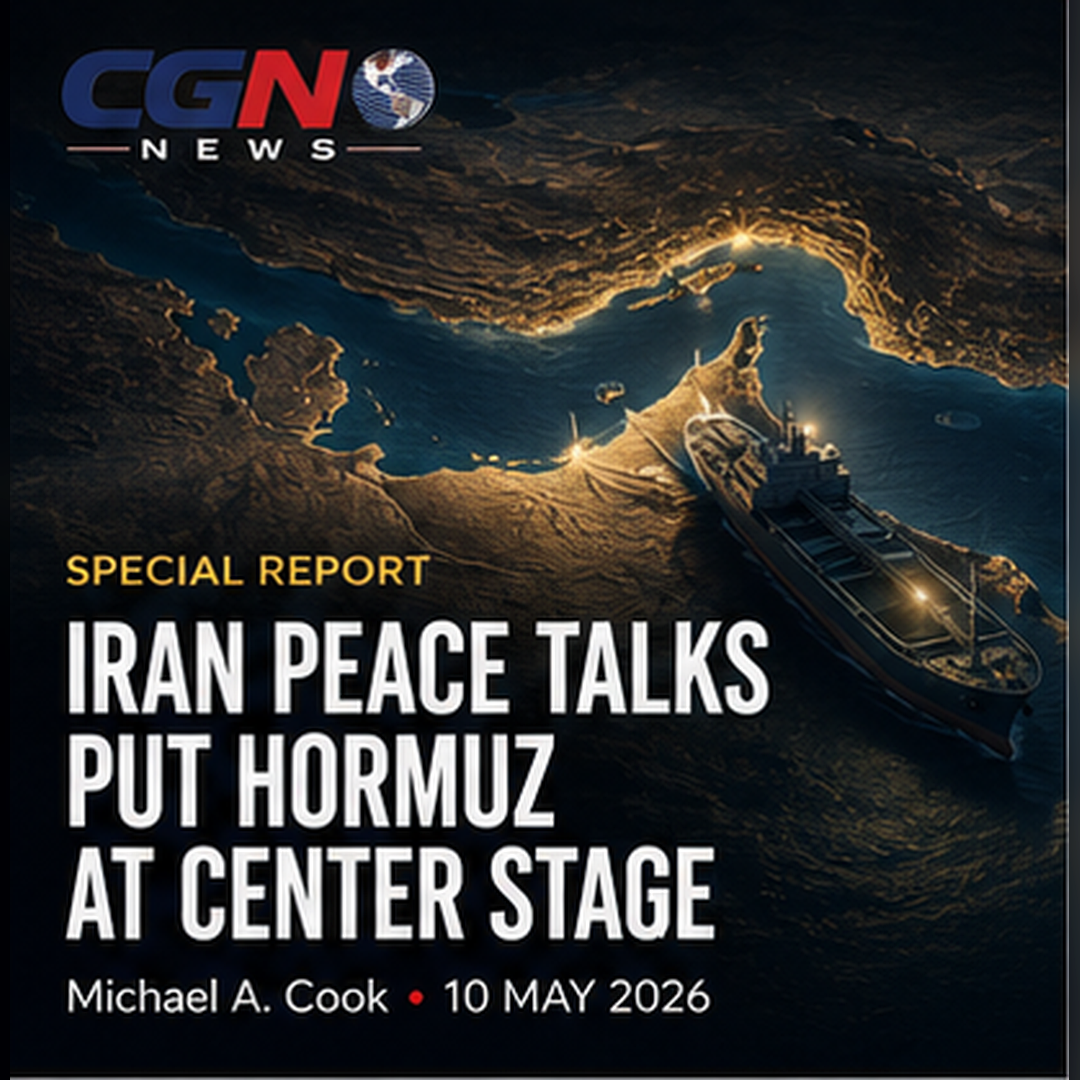
WASHINGTON — Iran’s formal response to a U.S. peace proposal has pushed the Strait of Hormuz back to the center of the war debate, making a narrow waterway between Iran and Oman the practical test of whether diplomacy can hold long enough to stop a wider regional fight. Tehran’s answer, delivered through Pakistani mediation, has not produced a breakthrough. It has, however, clarified the core dispute: Iran wants the immediate conversation centered on ending hostilities and reopening regional movement under terms it can accept, while Washington continues to insist that any durable settlement must also address Iran’s nuclear program and the military pressure surrounding the Gulf.
Associated Press reported Sunday that Iran is seeking a permanent end to the war in its response to the U.S. ceasefire proposal, but President Donald Trump rejected the reply as unacceptable. Reuters separately reported that Iranian state media said the response was sent through Pakistan and that people familiar with the diplomacy described the immediate target as a temporary memorandum of understanding. That narrower document would be designed to halt fighting and permit safer passage through the Strait of Hormuz while leaving harder questions for a later phase of talks.
That distinction matters. A memorandum that stops active military exchanges is not the same thing as a peace agreement. It would be a holding structure, a way to freeze the most dangerous parts of the conflict without requiring either side to settle every dispute at once. For shipping companies, insurers, oil producers, Gulf governments and U.S. commanders, even a temporary reduction in risk could be meaningful. For diplomats, though, the challenge is that the most urgent problems are connected to the most difficult ones: the blockade, tanker traffic, drone threats, sanctions, nuclear monitoring and the question of who controls security in one of the world’s most important shipping lanes.
The Strait of Hormuz is not just a map point. It is a pressure valve for global energy markets. Oil and liquefied natural gas moving from Gulf producers toward Asia, Europe and other customers often depend on predictable passage through the strait. When that passage is interrupted or viewed as unsafe, costs rise quickly through freight rates, insurance premiums, rerouted cargoes and market risk. Even when physical supply continues, uncertainty can behave like a tax on every barrel and every shipment. That is why financial markets reacted so sharply to signs of drone activity and why energy companies are watching the diplomacy as closely as military movements.
The response from Tehran appears to treat Hormuz security as a central bargaining issue. AP reported that the Iranian response touched on reopening the strait and ending hostilities, while Reuters reported that the temporary framework under discussion would allow passage through the waterway. Those descriptions suggest a practical opening: if negotiators can define what safe passage means, who monitors it, what ships are covered and what actions are prohibited, they may be able to reduce immediate danger without requiring a final settlement over Iran’s nuclear program.
Yet that is also where the diplomacy becomes fragile. Washington’s position has linked any broader peace to concerns about Iran’s nuclear activities. Iran has resisted talks that it views as surrender or outside pressure, and Iranian leaders have historically framed nuclear and missile issues as questions of sovereignty and deterrence. The more the United States demands front-end nuclear concessions, the less likely Tehran may be to accept a quick ceasefire. The more Iran insists that the first step must be a halt to hostilities without deeper concessions, the more likely Washington may view the proposal as incomplete. That gap is why Trump’s public rejection carries real consequence.
The administration’s rejection does not necessarily mean diplomacy is over. In high-pressure conflicts, public refusals can be part of positioning before further edits are exchanged. But the language of rejection narrows the room for officials who are trying to transform a first response into a workable document. It raises the political cost of compromise and signals to allies, adversaries and markets that the president does not yet see Iran’s answer as serious enough to pause pressure. If the two sides continue talking, mediators will likely have to produce revisions that allow both governments to claim they did not yield on their essential demands.
Pakistan’s role as a messenger gives the process a channel, but not a guarantee. Mediation can move paper, clarify proposals and reduce misunderstandings. It cannot force either side to trust the other. In the Gulf, trust is already undercut by drone incidents, maritime warnings and competing accusations over who is escalating. AP reported drone attacks targeting Gulf nations as the crisis continued, while Reuters reported that fresh drone activity weighed on regional markets and complicated hopes for a breakthrough. Those incidents matter because they can destroy the timing of diplomacy. A single strike, misidentification or retaliation can overtake a negotiating text before it is finalized.
For Gulf Arab states, the central concern is not abstract. They need shipping lanes open, ports secure, airspace predictable and energy infrastructure protected. Qatar, Kuwait, Bahrain, Saudi Arabia and the United Arab Emirates each face different exposure, but all are tied to regional confidence. The first Qatari LNG tanker to move through the Strait of Hormuz since the war began was a symbolic sign that some traffic may be possible. But symbolism is not the same as normal commercial operations. A few successful transits can calm nerves only if they become routine and are backed by an enforceable security understanding.
Saudi Arabia’s position illustrates the broader energy calculation. Reuters reported that Saudi Aramco posted a sharp first-quarter profit gain as Hormuz risks pushed use of its East-West pipeline to full capacity, allowing crude exports to move toward the Red Sea rather than through the strait. That infrastructure gives Riyadh a buffer many producers do not have. It also demonstrates why markets are not reacting only to current flows. They are pricing resilience. They are asking which countries can reroute supply, which firms can absorb higher costs, and which governments can keep economic plans on track if the Gulf remains unstable.
Israel’s posture is another pressure point. Any U.S.-Iran understanding that pauses fighting without resolving nuclear concerns could be viewed in Jerusalem as insufficient. A deal focused on shipping and ceasefire mechanics may reduce immediate maritime risk while leaving Israeli leaders worried about enrichment, weapons capability, missiles and regional proxies. That means the United States would have to manage not only Iran’s response, but also allied expectations. If one part of the regional security architecture rejects the pause as too weak, enforcement becomes harder. If every party waits for a perfect agreement, the immediate danger continues.
The nuclear issue is therefore the hinge. A temporary Hormuz memorandum could work only if it is not asked to do too much. It may be realistic to include commitments against attacks on commercial shipping, procedures for inspections or escorts, and a schedule for follow-on nuclear talks. It may be unrealistic to expect a single short document to settle sanctions relief, the future of Iran’s enrichment program, access for inspectors and security guarantees for Gulf states. The test for negotiators is whether they can separate emergency de-escalation from the final settlement without making the emergency document look like a concession or a trap.
The sanctions question is equally complicated. Iranian-linked reporting has described proposals that include relief on oil sanctions and the easing of restrictions tied to exports. From Tehran’s perspective, ending hostilities without economic breathing room may look like an unstable pause. From Washington’s perspective, sanctions are leverage, and lifting or suspending them too early could be portrayed domestically as rewarding escalation. The middle ground could involve narrow, conditional, reversible steps tied to verified shipping access or reduced military activity. But any such arrangement would require confidence in monitoring and a clear process for responding to violations.
For ordinary consumers far from the Gulf, the stakes are still tangible. Energy markets affect gasoline prices, airline costs, shipping expenses and inflation expectations. A war-risk premium in oil can travel through supply chains before households notice why prices moved. Businesses can face higher freight and insurance costs even if their goods never pass directly through Hormuz, because global shipping is interconnected. Investors may also rotate away from regional risk or price in volatility across emerging markets. That is why a maritime security issue can become a domestic economic issue in the United States, Europe and Asia.
The immediate diplomatic question is whether Trump’s rejection is a dead end or an invitation to rewrite. If Washington wants Iran to address nuclear issues sooner, it may need to present a sequence that lets Tehran discuss them without appearing to accept defeat. If Tehran wants a halt to hostilities first, it may need to provide clearer assurances on shipping, drone activity and follow-on negotiations. Both sides have incentives to avoid a broader war, but both also have incentives to avoid being seen as weak. That is the classic problem in wartime diplomacy: the agreement that reduces danger is often the same agreement each side fears will be criticized at home.
The Strait of Hormuz will remain the visible measure of progress. If ships move, insurers return, drone incidents stop and governments lower their language, diplomacy will look more credible. If attacks continue, military escorts expand and leaders trade public threats, the proposal will look more like another document overtaken by events. For now, the gap between Iran’s answer and Washington’s demands remains wide enough to keep the region on edge.
The most realistic outcome may be neither peace nor collapse, but a contested interim phase: limited shipping arrangements, continued nuclear pressure, selective sanctions bargaining and repeated tests of restraint. That may not satisfy either side politically, but it could reduce the risk of a wider regional war if it is carefully written and enforced. The danger is that temporary arrangements require discipline, and the Gulf is full of actors capable of disrupting discipline.
At this stage, the story is not simply whether Iran accepted or rejected a U.S. plan. It is whether the two governments can define a first step that stops the fighting without pretending the hardest disputes have been solved. The answer will be measured less by statements and more by the movement of ships, the absence of drones, the tone of allied capitals and the willingness of negotiators to keep talking after public rejection. In a crisis built around force, the first durable sign of progress may be a quiet one: a tanker passing through Hormuz without incident.
The practical obstacle is verification. An interim document would need to define what each side is promising in a way that commanders, port authorities, shipping firms and regional governments can understand. Vague pledges to reduce tension will not be enough if vessels remain uncertain about escorts, inspections or retaliation risks. The same is true for drone activity. A halt to hostilities must be measurable at sea and in the air, not only announced in capitals.
That is why any next draft will likely be judged by mechanics: who communicates incidents, what hotline exists, what happens if a drone is detected, whether third-party monitors are involved and how quickly both sides must respond to alleged violations. Diplomacy can begin with broad principles, but maritime security depends on operational detail. Without that detail, markets will continue to treat peace language as fragile.
Additional Reporting By: Associated Press; Reuters; Reuters markets reporting; Reuters energy reporting.