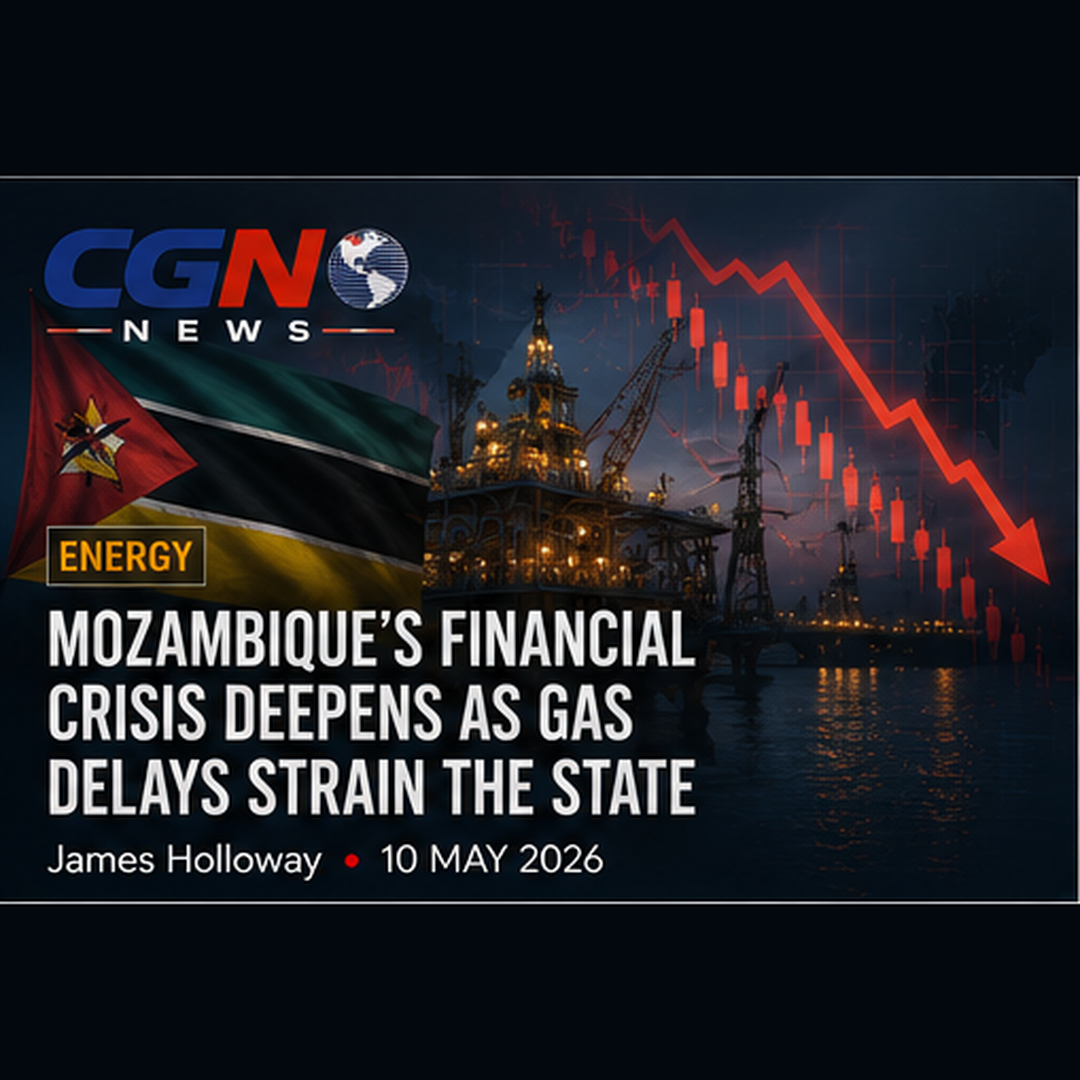
LONDON | Mozambique’s worsening financial crisis shows how a country can sit on major gas potential and still face a severe state-finance squeeze when security, politics and delayed projects block expected revenue.
Reuters reported that Mozambique’s financial crisis is going from bad to worse as delayed gas projects, insurgency in the north, post-election unrest and weaker public finances strain the state. The IMF has reclassified Mozambique’s debt as unsustainable, with total debt near 90% of GDP at the end of 2024, while talks on a new program are expected in June.
The gas story is central because Mozambique’s huge offshore resources were supposed to transform government revenue, exports and investor confidence. Instead, violence in Cabo Delgado and repeated project delays have pushed expected benefits further into the future.
Energy wealth can create a dangerous illusion. A country may look rich on paper because resources are under the seabed, but budgets depend on cash flow, not geological promise. If LNG revenue arrives years late, debt service and public spending pressures do not wait politely.
The insurgency has been the most visible obstacle. Attacks in northern Mozambique forced companies and governments to reassess security, evacuation plans and project timelines. Even when projects resume, investors price the risk into financing, insurance and construction decisions.
The debt problem is now acute. Reuters reported that the IMF’s assessment shifted to unsustainable debt because of deteriorating public finances and arrears. That label matters because it can shape negotiations, investor confidence and the likelihood of restructuring.
Mozambique’s $900 million international bond due in 2031 is now part of the discussion. Investors will watch whether the government can maintain payments, negotiate support or eventually seek new terms. Bond stress can limit public investment and raise the cost of future borrowing.
The metical’s weakness adds another layer. A weaker currency can make imported fuel, food and equipment more expensive. For a country with high poverty and infrastructure needs, currency pressure can quickly become a household and political problem.
The Middle East conflict and global energy volatility complicate the picture. Higher import costs can hurt Mozambique before its own gas revenues fully arrive. That is one of the ironies of the crisis: a future LNG exporter can still suffer from current energy-market shocks.
Post-election unrest has also hurt confidence. Investors do not look only at resources; they look at institutions, social stability, rule of law and policy predictability. Political unrest increases the risk that projects are delayed, contracts disputed or reforms postponed.
Climate disasters have worsened the state’s burden. Cyclones and floods damage infrastructure, displace people and force emergency spending. A government already struggling with debt has less room to rebuild after each shock.
The IMF talks expected in June will be a key marker. A new program could provide financing and a policy framework, but it may also require fiscal reforms that are socially difficult. A country under pressure may need outside support while also facing public frustration over austerity.
For energy companies, the question is whether security and financing conditions are stable enough to justify continued commitment. Mozambique’s gas resources remain valuable. But long-cycle projects need confidence that construction, export routes and government relations can hold over many years.
For citizens, the promise of gas can be frustrating. They hear that the country has world-class resources but still face poverty, weak services and higher costs. That gap between promise and lived reality can erode trust.
The case also illustrates the resource-curse problem. Natural wealth can help a country develop, but only if institutions manage revenues transparently, invest wisely and avoid debt built on future assumptions. When the revenue timeline slips, the weaknesses become visible.
Mozambique’s government has few easy choices. Cutting spending can deepen social pain. Borrowing domestically can crowd out private credit. Restructuring debt can damage reputation. Waiting for gas revenues may not solve immediate arrears.
Regional stability matters too. Cabo Delgado’s insecurity affects neighboring countries, humanitarian flows and regional energy planning. Southern Africa has an interest in Mozambique’s crisis not becoming a wider security or economic problem.
The best-case path is a combination of credible IMF support, improved security, transparent fiscal reform and a realistic LNG timeline. The worst-case path is deeper arrears, weaker currency, delayed projects and rising unrest.
Mozambique’s crisis is therefore an energy story and a state-capacity story. Gas can still become a pillar of the economy. But without security, fiscal discipline and public trust, resource wealth can remain just out of reach while the bills come due.
The next phase will test whether the institutions at the center of this story can turn public statements into verifiable action. For readers, the important questions are practical: what changes next, who is affected, which official records confirm the direction of the story, and whether leaders explain the tradeoffs clearly enough for the public to judge the outcome.
The next phase will test whether the institutions at the center of this story can turn public statements into verifiable action. For readers, the important questions are practical: what changes next, who is affected, which official records confirm the direction of the story, and whether leaders explain the tradeoffs clearly enough for the public to judge the outcome.
The next phase will test whether the institutions at the center of this story can turn public statements into verifiable action. For readers, the important questions are practical: what changes next, who is affected, which official records confirm the direction of the story, and whether leaders explain the tradeoffs clearly enough for the public to judge the outcome.
The LNG projects are also tied to global energy security. Buyers in Europe and Asia want diversified gas supplies, especially after years of volatility. Mozambique’s resources could become strategically important if projects move forward, but buyers need confidence that cargoes will arrive on time.
The insurgency’s economic effect goes beyond direct security costs. It raises the price of insurance, increases the need for private security, slows construction and makes lenders more cautious. Every delay compounds the gap between promised revenue and immediate fiscal pressure.
A debt restructuring would not be only a financial event. It could affect schools, health services, infrastructure and wages if government spending is squeezed further. For citizens, bond discussions can seem distant until they show up as service cuts or higher prices.
The IMF’s role will be controversial. A new program may help stabilize finances, but reforms can be unpopular if they require spending restraint or new revenue measures. Mozambique’s leaders will need to explain why outside support is necessary and what protections exist for vulnerable households.
Climate risk makes the fiscal picture even harder. Cyclones and floods create sudden needs for reconstruction and humanitarian support. A state already short of money cannot easily absorb repeated disasters while also financing security and debt service.
Mozambique’s future still contains opportunity. Gas, ports, agriculture and regional trade can support growth. But the current crisis shows that resources do not become development automatically. They must be protected by security, institutions, fiscal discipline and public trust.
The energy importance of mozambique’s financial crisis deepens as gas delays strain the state is that it shows how resources, security and public finance are inseparable. A country can have valuable reserves and still face crisis if projects are delayed, institutions are weak, borrowing costs rise or communities lose confidence.
Energy projects are long-cycle bets. They require years of financing, security, construction, regulation and market access. When any one of those pieces breaks, the delay can move directly into government budgets and investor confidence.
The human stakes are often hidden behind debt language. Arrears, bond spreads and IMF programs sound technical, but they can affect school funding, hospitals, food prices, fuel imports, jobs and the ability of governments to respond to disasters.
International partners will be watching governance. Resource wealth can attract capital, but capital wants predictable rules, credible security and a realistic fiscal plan. Without those, even world-class reserves can remain stranded.
For CGN readers, the story is a reminder that energy security is global. A delay in one African gas project can affect future supply assumptions, investment flows, regional stability and the bargaining power of other producers.
The next milestones will be financial and physical: talks with lenders, project restart decisions, security conditions near development areas and whether the government can stabilize public finances without deepening social strain.
The energy importance of mozambique’s financial crisis deepens as gas delays strain the state is that it shows how resources, security and public finance are inseparable. A country can have valuable reserves and still face crisis if projects are delayed, institutions are weak, borrowing costs rise or communities lose confidence.
Energy projects are long-cycle bets. They require years of financing, security, construction, regulation and market access. When any one of those pieces breaks, the delay can move directly into government budgets and investor confidence.
The human stakes are often hidden behind debt language. Arrears, bond spreads and IMF programs sound technical, but they can affect school funding, hospitals, food prices, fuel imports, jobs and the ability of governments to respond to disasters.
International partners will be watching governance. Resource wealth can attract capital, but capital wants predictable rules, credible security and a realistic fiscal plan. Without those, even world-class reserves can remain stranded.
For CGN readers, the story is a reminder that energy security is global. A delay in one African gas project can affect future supply assumptions, investment flows, regional stability and the bargaining power of other producers.
The next milestones will be financial and physical: talks with lenders, project restart decisions, security conditions near development areas and whether the government can stabilize public finances without deepening social strain.
What this means
Mozambique matters because delayed energy wealth can worsen rather than solve a fiscal crisis when governments borrow against a future that does not arrive on time. The next IMF talks, LNG timelines and security conditions will determine whether the country stabilizes or moves closer to restructuring.
Additional Reporting By: Reuters.